Wilson Clash 100 v3 Racket Specs
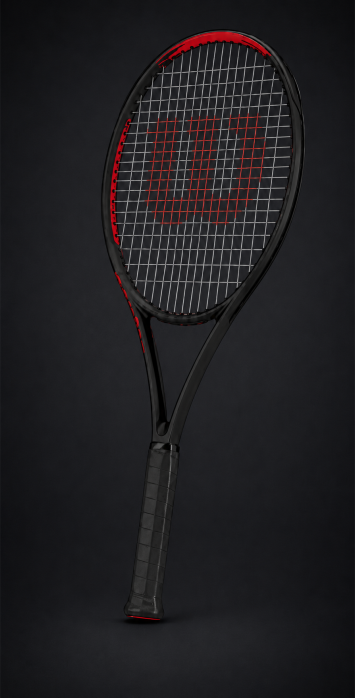
Explore the Wilson Clash 100 v3 by racket part and spec. The flexible 100 sq in frame combines a 295 g unstrung weight with a strongly head-light balance.
Wilson Clash 100 v3 Specs
Check current Amazon price
As an Amazon Associate I earn from qualifying purchases.
Racket specs
Head size 100 sq in / 645 cm²
The hitting-surface area. Larger heads usually add forgiveness and easy power; smaller heads usually favor precision and a more compact response.
At 100 sq in / 645 cm², the Wilson Clash 100 v3 uses the versatile modern midpoint between forgiveness, power, and directional control.
Unstrung weight 295 g / 10.4 oz
The frame weight before strings, overgrip, or dampener are added. More mass can improve stability and plow-through, while less mass is generally easier to accelerate.
This 295 g / 10.4 oz measurement means the Wilson Clash 100 v3 sits in a manageable performance range with useful stability and acceleration.
Strung weight 310 g / 10.9 oz
The measured weight after strings are installed. This is closer to the weight a player swings, though an overgrip and dampener can add several more grams.
This 310 g / 10.9 oz measurement means the Wilson Clash 100 v3 has enough playing mass for stability, but asks more of timing and endurance.
Length 27 in / 68.58 cm
The end-to-end racket length. Standard adult frames are 27 inches; extra length can add reach and serve leverage but can reduce maneuverability.
At 27 in / 68.58 cm, this is a standard-length adult frame, preserving familiar reach and maneuverability.
Balance 310 mm unstrung / 10 pts HL
Where the racket mass is centered. A more head-light balance is easier to maneuver, while more mass toward the head can add stability and power.
The 310 mm unstrung / 10 pts HL balance keeps this frame maneuverable for its weight while leaving useful mass through contact.
Beam 24 mm constant
The frame thickness, sometimes measured at several points. Wider beams tend to return more energy; thinner beams commonly provide more flex and direct ball feedback.
The 24 mm constant beam is widest through the power zone, adding response while tapering elsewhere for feel and handling.
String pattern 16x19
The number of main and cross strings. More open patterns usually help launch and spin, while denser patterns often improve directional control and string life.
The 16x19 pattern balances accessible spin and depth with familiar all-court predictability in the Wilson Clash 100 v3.
Material BLX / high-performance carbon fiber
The frame layup and named dampening or reinforcement materials. These influence stability and feel, but do not by themselves determine how a racket will play.
BLX / high-performance carbon fiber is the listed construction package for this generation, used to tune the Wilson Clash 100 v3 response, stability, and vibration feel.
Stringing advice 50-60 lbs
The manufacturer-supported tension range. Lower tension generally adds depth and pocketing; higher tension generally produces a firmer, lower-launch response.
The 50-60 lbs range gives this frame room for a softer, deeper response at the low end or a firmer, lower-launch bed at the high end.
Specs verified against Wilson's official Clash 100 v3 product data. Regional Wilson pages publish a nominal unstrung weight of 293-295 g; this page uses Wilson Japan's 295 g specification.
String recommendations
The Clash is flexible but still lively, so choose strings for the launch and feel you want rather than assuming any poly is automatically comfortable. A soft poly near 49 lbs balances control and spin; multifilament near 54 lbs is the safer default when durability is not a problem.
Starting points are editorial guidance, not a medical guarantee. Technique, ball, court, climate, and restringing frequency all change the result.
Solinco Hyper-G Soft
Best for: Intermediate topspin players
The soft shaped poly adds a more defined response and controls the Clash’s easy depth while preserving its flexible-frame feel.
Watch for: Even soft poly should be replaced when it goes dead.
Wilson NXT
Best for: Developing players and comfort-first hitters
NXT reinforces the Clash’s comfort strength and the slightly higher tension keeps the lively 100 head predictable.
Watch for: Heavy topspin can fray multifilament quickly.
HEAD Lynx Tour
Best for: Experienced hitters wanting a crisper bed
A firmer shaped poly gives the very flexible frame clearer feedback and lower launch without using high tension.
Watch for: This setup is for regular string breakers, not players who leave poly installed indefinitely.
What other players and experts recommend
-
Solinco Hyper-G Soft
Tennis Companion used Hyper-G Soft for its Clash 100 v3 playtest and presents the pairing as a representative setup.
Expert review Tennis Companion: Wilson Clash 100 v3 Review -
Natural gut mains / Luxilon Element crosses
A Clash owner reported a gut-and-Element hybrid as a way to preserve comfort while improving useful life over a full soft bed.
Player discussion Reddit r/10s: Wilson Clash v3 100 string recommendations -
X-One Biphase at 22 kg / 48.5 lbs
A comfort-focused player proposed X-One Biphase around 22 kg for the Clash 100 v3.
Player discussion Reddit r/10s: Wilson Clash 100 V3 and X-One Biphase for comfort?